The Rise of the Mobile-Only Age
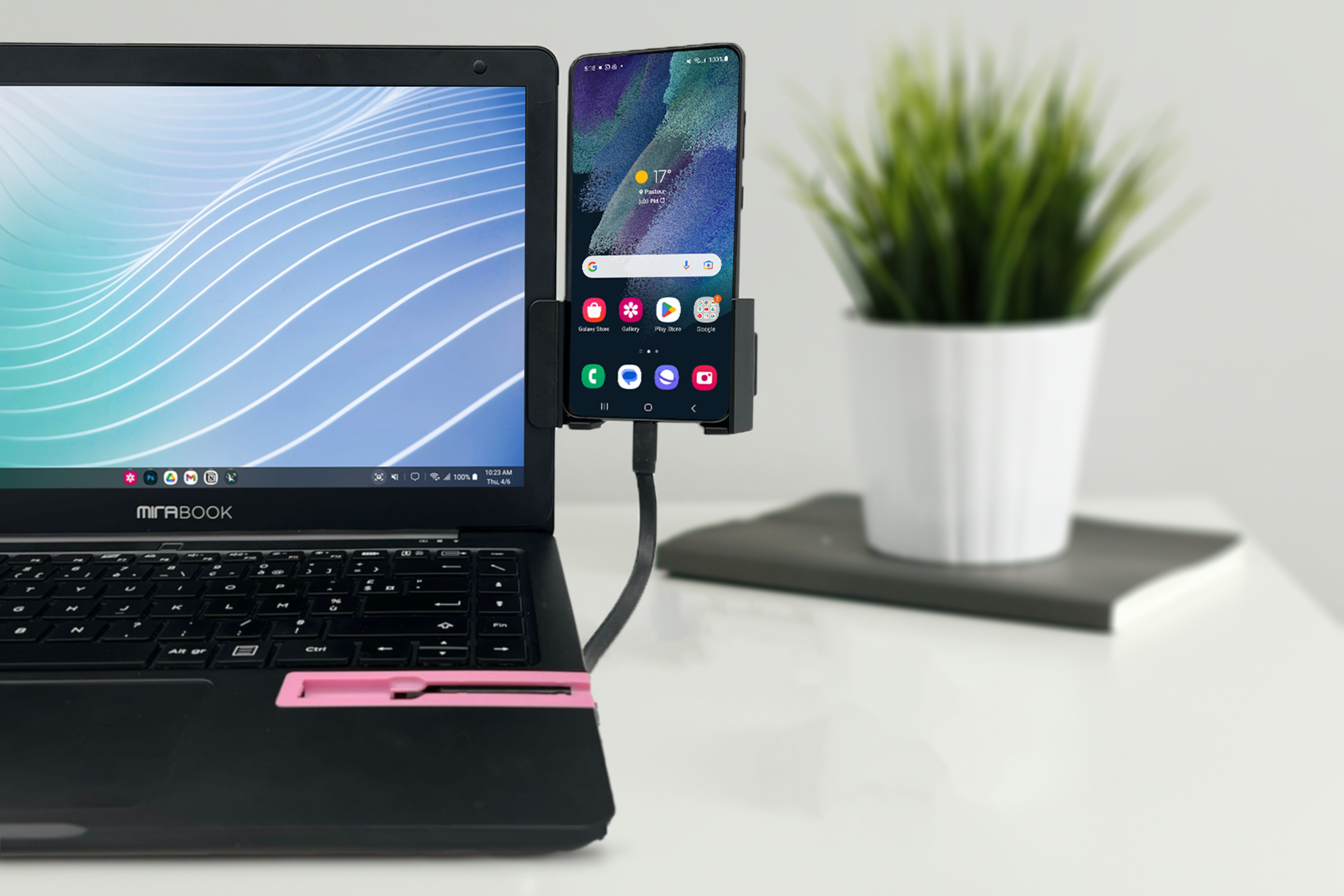
The Rise of the Mobile-Only Age
May 2026
The AI Age will be the final trigger
I once thought sustainability would ignite the Mobile-Only era. It seemed like the cleaner and more rational path toward digital sobriety: fewer machines, less waste, more coherence. But that was not enough to move the world. What could be?
In 2026, the cost of computing is rising fast as the AI economy expands. People will still need to work, create, communicate, and compute, but they will need a reliable and affordable way to keep doing so. The answer is already there, waiting in their pocket: one device, always with them, powerful enough, personal enough, ready to become the center of everything. Soon, the smartphone will stop being seen as a simple companion and begin to be accepted as the computer itself, becoming the main gateway to AI interactions.
The future of personal computing is already in our hands.
For years, we treated the smartphone like a secondary machine. A simple communication tool made to support the real computer. And yet, quietly, it kept evolving. It absorbed our camera, our GPS, our wallet, our music, our messages, our identity, and more broadly, our everyday life. It became the one device we never leave behind, the one that follows us everywhere, the one that knows us best.
Still, in 2026, most people remain stuck in a fragmented digital life, tied to the cloud and spread across too many devices. A smartphone in the pocket. A laptop in the bag. A tablet at home. Sometimes even a desktop at work. This is not the promised future. It is only a transition.
The smartphone did not kill the PC yet. It is becoming it.
The market has already accepted the smartphone as the center of modern digital life. What it still struggles to accept is the next consequence: the smartphone is no longer supposed to assist the computer. It is becoming the computer. And this is where the Mobile-Only era begins.
Mobile-Only is not about having less technology. It is about making technology more coherent by recentering it around one device. One intelligent pocket computer at the center of our lives. One persistent environment following us everywhere. One digital companion capable of taking different forms depending on our needs, without multiplying machines, without fragmenting our data, without forcing us to live between disconnected worlds, while still giving us the freedom to adapt to every context.
People will soon discover the Mobile-Only way. A simpler relationship with technology. A more natural one. A more continuous one. Because the next step in computing is not multiplication. It is convergence and optimization.
But to understand where this vision is going, we first need to understand where it comes from.
The natural evolution of smartphones
The smartphone was never meant to remain a secondary device. From the beginning, it was evolving toward something bigger. The calculator, the camera, the MP3 player, the GPS, the portable game console, the credit card — all these objects were gradually absorbed by the smartphone and turned into features. This was never a coincidence. It was the natural logic of technological evolution.
In 2016, global mobile and tablet internet usage overtook desktop. Later, Android overtook Windows in overall internet usage share. These were not minor milestones. They were a clear signal that the primary screen of humanity had changed. The center of gravity had already moved.
Smartphones did not become central by accident. They became central because it is their nature. They gather features. They absorb uses. They compress entire categories of devices because they are, in many ways, the ultimate form factor. Small enough to disappear into a pocket. Powerful enough to run our lives. Intuitive enough to be used by almost anyone. Personal enough to become the true center of our digital existence.
The greatest achievement of the last fifteen years was not only better cameras or brighter displays. It was that smartphones reached a level of computing power that made convergence inevitable. What once looked like a communication device became a real computer. And the proof is now everywhere: even the computer industry itself is being rebuilt around mobile ARM chips.
I saw the signs early.
In 2011, a high-end smartphone barely reached 1 GB of RAM. Today, smartphones can reach 16 GB. That evolution says everything. More features, more power, more centrality. These two movements alone were enough to convince me that the future of computing would converge toward the smartphone.
That conviction did not come from theory. It came from a moment of observation.
I was sitting in a large amphitheater in Lyon, watching my classmates with a laptop open in front of them and a phone placed beside it. The scene felt absurd. If the smartphone was already a computer, why were we still treating it like a secondary object? Why not let it take the form we needed, when we needed it? That question stayed with me because it was too simple to ignore.
Soon after, I bought a Motorola smartphone and began experimenting with a Lapdock, one of the first of its kind. I hacked the connectors, tested the concept in real life, and used it for my student work. The promise was obvious. So were the limits. The lapdock was too expensive. Compatibility was too narrow. Smartphones were not powerful enough yet. But the direction was unmistakable. Even then, I could already see it.
And one lesson became clear very early: success is often built on a graveyard of failures.
Technologies rarely arrive fully formed. They stumble, they disappoint, they disappear, and then they return stronger. Every industry follows the same pattern. It mocks the first generation, doubts the second, copies the third, and by the fourth, pretends the outcome was inevitable all along.
Mobile-Only belongs to that story.
It is not a sudden disruption. It is the continuation of a long and natural evolution. And this time, the world is finally close to catching up.
Why the market rejected it too early
The market often meets the future too early, rejects it, and later calls it obvious.
Every technological revolution begins in an awkward form. Tablet computers failed for decades before the iPad. Smartwatches existed long before they became ordinary. Virtual reality rose in the 80s and 90s and collapsed more than once before becoming credible again. Electric vehicles lived through several false starts before the world was ready to desire them at scale.
Mobile-Only followed the same path.
I just mentioned Motorola, who tried too early. Ubuntu Touch tried after. Microsoft tried again with Continuum in 2014. Samsung pushed with DeX in 2017. Huawei moved in the same direction with Easy Projection. Motorola returned with Ready For in 2021. Google kept pulling Android closer to a true desktop experience. Each attempt solved part of the puzzle for its OS to offer a true PC experience. None solved all of it completely.
The market likes to look at these moments and call them failures. But they were never dead ends. They were rehearsals.
Each generation left something behind. A lesson. A technical standard. A better interface. A clearer use case. Slowly, what once looked fragmented started to align. USB-C became the obvious connector. DisplayPort Alt Mode emerged as the standard protocol for carrying video and audio through the smartphone. The ecosystem was no longer a collection of isolated experiments. It was beginning to form a language.
That is how real technological shifts happen. Not in one perfect product, but through a succession of imperfect attempts that make the next one possible.
In 2012, when I was experimenting with a Lapdock as a student, people looked at me with confusion. They did not see a glimpse of the future. They saw a strange setup. But history is full of ideas that look ridiculous before they look inevitable. The first generations are rarely elegant. Their role is not to be perfect. Their role is to prove that the trajectory exists.
The graveyard of failed attempts is not evidence that the idea was wrong. It is evidence that timing matters more than most people admit. And timing itself is made of accumulated failed attempts, of ideas that need confrontation and time to mature.
What Miraxess really proved to the world
For more than a decade, Miraxess pushed a vision the market was not yet ready to embrace. And that matters, because industries do not move only when giants decide to move. They also move because smaller actors spend years proving that dismissed ideas are possible. They build prototypes. They educate users. They talk to partners. They fail in public. They refine the language, the standards, and the use cases that larger companies later industrialize.
I was 22 years old when I started working on the MiraBook. At that age, I wanted to build the perfect product, the kind of product that would change the world in one move. Looking back, it was beautiful, ambitious, and necessary, but also deeply utopian. I had the vision, the energy, and the conviction. What I did not have yet was the patience that markets impose on those who try to arrive too early, even after 10 years trying.
If I could speak to my younger self today, this is what I would tell him.
The market will not take off despite how hard you work.
It will not move faster just because your vision is right.
And it will not mature on your schedule.So start simpler. Sell earlier. And stay alive until the day comes.
Begin with something more accessible, like a docking station. Learn from the market while it is still forming. Let the ecosystem evolve. Let the standards settle. Let the habits change. Do not exhaust yourself trying to force a market to bloom before its season. Be patient enough to stay in the game until the world is finally ready.
Looking back, the Miraxess experience can be read as much more than a company story. It was a market exploration. A long, demanding, expensive exploration of what Mobile-Only could become, where it made sense, what it still lacked, and what the world would eventually need to make it real.
And we built a lot along the way.
- On the product side, we were among the first to shape the idea of a true business lapdock, with HDMI-out and a built-in cable designed for a more direct and plug-and-play experience.
- On the technology side, we contributed significantly to the spread, stabilization, and practical relevance of DisplayPort Alt Mode in this ecosystem. More broadly, we helped make the Mobile-Only stack more credible, more tangible, and more usable. We took part in the technical standardization that allowed the vision to stop looking fragile and start looking real.
- On the use-case side, we were among the first to deploy lapdocks with police forces, and we explored dozens of real-world scenarios where Mobile-Only could become more than a concept. We helped show that this vision was not only for enthusiasts or early adopters. It could already answer the needs of frontline workers who needed simplicity, mobility, ruggedness, continuity, and lower device complexity.
- On the visibility side, we gave a lot. Through crowdfunding, trade shows, demonstrations, and years of evangelization, we kept putting this vision into the conversation when almost nobody was ready to hear it.
That is what Miraxess really proved — making tons of mistakes on the way, of course.
Samsung DeX later validated the thesis at large scale in 2017. One of the world’s leading smartphone manufacturers was finally saying the same thing in product form: your phone can become a desktop experience. Technically, it was a breakthrough. Symbolically, it was an important moment. But even then, something was missing. The validation was real, yet the cultural shockwave never came. DeX mattered, but it did not erupt into the public imagination the way truly disruptive consumer shifts usually do.
That is because, by then, the barrier was no longer technical. It was psychological. It was cultural. It was narrative.
The industry proved that Mobile-Only could exist before it proved why people should care. Building the technical standards that make a vision possible is often invisible work. Creating visible use cases and making the market care is a marketing battle that demands serious investment.
And that is why, even after everything we built, it was still not enough.
Because building the future is one battle. Making the world buy it is another.
To make a new behavior feel natural, desirable, and inevitable, you need more than engineering. You need education, distribution, storytelling, ecosystem power, and the ability to impose a narrative at global scale. You need the force to turn an innovation into a cash machine.
That is where only big tech can truly change the game.
Only a giant can put the solution into millions of hands, promote it to the world, reassure, align developers, shape habits, and make a new computing model feel obvious.
That is why Mobile-Only is taking so long. Not because the vision is weak or because the technology is irrelevant. But because pioneers like Miraxess helped build the road, while the world is still waiting for giants to turn it into a highway.
And I know, with lucidity, that Miraxess was part of that fertile ground for tomorrow’s attempts.
Why 2026 changes everything
What makes this moment different is simple: the technical barriers that once held Mobile-Only back are finally collapsing.
For years, compatibility had two layers. Hardware first, software second. Both used to be fragile. Both used to break the vision. A phone might have enough power but not the right connector. It might have the right connector but not the right protocol. It might support video output but offer no real desktop interface. The promise was visible, but the chain was incomplete.
That is no longer the case.
On the hardware side, the ecosystem has matured dramatically. USB-C has become the common language of modern devices, including Apple’s latest iPhones, and external display support is no longer a marginal curiosity. DisplayPort Alt Mode has also become the natural path for many Android smartphones and connected-display desktop experiences. The old hardware fragmentation that once made Mobile-Only feel fragile has been reduced to a level the market can finally build on.
On the software side, the change is just as important. Desktop modes are no longer isolated experiments. Samsung DeX and Motorola Ready For proved that a smartphone can offer a serious desktop-like experience. Ubuntu Touch showed that the vision could also live outside the dominant ecosystems. And now, even the iPhone world is generating its own desktop-mode initiatives through products like InfiniteX2P and Prodocktive, showing that the desire for convergence is no longer confined to Android enthusiasts.
Google’s role in this shift may be the most important of all. Android 16 and 17 now support a more mature desktop windowing experience on connected displays, and Google is openly encouraging developers to design for desktop-like Android sessions across monitors, keyboards, and mice. The Adaptive Apps framework is a perfect example of that. That is not a side feature. It is a strategic direction. That means Google no longer sees desktop mode as an experiment inherited from Samsung, but as a segment worth standardizing and ultimately dominating.
And then there is Aluminium OS.
Even if the final public name changes, the signal matters. Recent reporting and leaks point to Google moving toward a more PC-oriented Android environment, tied to the broader Googlebook direction and a deeper convergence between Android and laptop computing. Taskbar, desktop icons, Android at the core, a more unified surface for work, apps, files, and AI. Not a nostalgic copy of the old PC, but a migration path beyond it.
Apple, in its own way, is also drifting toward the same frontier. It still protects the distinction between iPhone, iPad, and Mac, but the wall is not as solid as it used to be. Apple supports connected displays at the platform level, and iPadOS has already normalized external-display workflows and desktop-like windowing through Stage Manager. It is not yet a true Apple-made iPhone desktop mode. But the conceptual barrier is weaker than before, and the direction is visible.
At the same time, the rest of the environment has changed in favor of Mobile-Only. Smartphones are now powerful enough for the majority of human workflows. Cloud software has weakened the old dependency on local desktop environments. ARM is no longer a side architecture reserved for mobile devices. It is now shaping the future of computing itself. And all of this matters even more because AI is changing where computing value really lives.
AI reinforces the central position of the smartphone by allowing it to carry our future daily AI agents or companions everywhere.
The more computing becomes conversational, predictive, ambient, and personal, the less sense it makes to anchor digital life around a laptop that opens occasionally and stays behind when life moves. AI will not invent Mobile-Only. It will accelerate it. Because AI increases the value of context, and no device has more context than the smartphone.
The shift is no longer theoretical. It is no longer waiting for the missing piece. It is already being designed.
Everything is now in place for the fire to spread. The standards are here. The power is here. The use cases are here. What is still missing is the spark. That spark may come from economics.
As traditional PCs become more expensive and memory costs keep rising due to the RAMpocalypse, more people will start questioning the old model. They will still need to work, create, communicate, and compute, but they will become far more open to affordable alternatives. That is when Mobile-Only can finally stop looking like a niche vision and start looking like the obvious answer.
Instead of buying yet another full computer, people will reuse the intelligence they already carry in their pocket. The laptop will become a lapdock. The desk will become a dock. And the smartphone will finally be seen for what it already is: the real computer.
This shift may not happen because the world suddenly understands the vision. It may happen because the old model simply becomes too expensive to maintain.
What the industry still needs to solve
The hardest part is no longer proving that Mobile-Only can work, as this battle has already been fought.
The real challenge now is to make Mobile-Only stop looking like a strange experiment and start looking like what it truly is: a credible direction for the future of computing.
And that starts with visibility.
Mobile-Only still lacks the marketing force required to become a mainstream behavior. It needs storytelling built around real use cases. It needs repetition around its benefits. It needs products shown in the right hands, in the right situations, with the right message. People need to stop seeing desktop mode as a cool hidden feature and start seeing it as a simpler, more natural way to live with technology.
Obviously, the world does not adopt what it does not understand.
But visibility alone is not enough. The second challenge is innovation.
Because even if the vision is now technically credible, there are still a few key obstacles left to solve if we want the experience to become truly obvious for everyone.
To me, two major points remain: heat and connectivity.
The smartphone was designed to be a fanless pocket computer, and that is one of its greatest strengths. When you start asking more from it — gaming, heavy multitasking, external display usage, demanding workflows — the limits quickly appear. In summer, during a heatwave, a Mobile-Only setup can become difficult to use for more than a few minutes before the phone starts heating too much, throttling, or warning you. That is not a detail. It is one of the last barriers between a promising concept and a truly reliable experience.
So we need better cooling. Maybe it will come from new internal smartphone architectures. Maybe it will come from smarter external accessories. Probably both. But one thing is clear: if the smartphone is to become the only computer for more people, it must sustain performance in real life, not only in ideal conditions.
The second point to improve is connectivity.
Using a lapdock with a cable already works very well. It is the best solution we have today. But it is still not enough to unlock mass adoption. It needs to become easier, cleaner, and more practical. Cables get lost. They break. They gather dust. They create friction. And friction is the enemy of adoption.
What would radically improve the experience is true wireless. Not outdated protocols like Miracast with all their limitations in bandwidth, latency, and stability. I mean real-time, secure, short-range transmission for data, audio, video, and ideally charging as well. Years ago, I had already identified a chip from STMicroelectronics that could fit this kind of vision perfectly. This is the kind of breakthrough that could change everything. We can also imagine a pogo-pin magnetic technology, but in my opinion it would be difficult to make it standard. One thing is for sure: the day your smartphone can instantly connect to its shell with the simplicity and reliability of a natural extension, Mobile-Only will take a major step forward.
That is why Mobile-Only still needs more entrepreneurs. More business people willing to build use cases. More designers willing to improve ergonomics. More engineers willing to rethink form factors. More innovators willing to design better lapdocks, better accessories, better app compatibility, better workflows.
Because if Mobile-Only becomes a profitable playground for innovation, it will naturally attract more entrepreneurs. And where entrepreneurs go, investors follow.
In the end, what the industry still needs can be reduced to two words: Visibility and innovation.
And this leads to an uncomfortable question.
Is Apple the only company capable of launching an innovation to the world?
No.
But Apple is one of the very few companies capable of turning a capability into a mass-market behavior at global scale. They have done it again and again by packaging, simplifying, and legitimizing technologies for the mainstream. That is their real strength. Not inventing everything first, but making the world feel like it was always obvious.
At the same time, Apple is not the only force that can move the market. Google now has the power, the ecosystem, and the strategic interest to push Mobile-Only much further. And if Google truly decides to invest heavily in Android Desktop Mode, accessories, AI, and product storytelling, then the shift could happen much faster than people expect.
That is the real challenge for Mobile-Only. Not proving that it works. Not proving that it is useful. But finding the companies, the founders, the investors, and the storytellers strong enough to trigger mass adoption.
The Windows culture is fading away
A few years ago, I had a very interesting discussion with a former Executive Vice President at Samsung about why DeX never truly took off.
According to him, one of the main reasons was Microsoft’s influence behind the scenes. People at the top understood the threat perfectly well. If the smartphone ever became the main computer, Microsoft would lose its central position in personal computing. They had missed the smartphone battle with Windows Phone, and they knew that if the center of gravity shifted, their dominance could collapse within a decade.
Whether that alone explains everything or not, the logic was clear to me.
Microsoft is losing this battle for three deeper reasons.
First, they no longer have a real position in the smartphone market. And that matters because the smartphone is not a side category anymore. It is the heart of modern digital life. If you do not control that layer, you are already fighting from behind.
Second, many IT directors are tired of Microsoft’s grip, especially since the Windows 11 scandals. Years of imposed standards, heavy ecosystems, endless complexity, licensing logic, and dependency have created frustration. For a long time, they had no real alternative. But now that cloud software, mobile operating systems, and browser-based workflows are becoming strong enough, that old dependency no longer feels untouchable for most enterprise users.
And third, the most important reason of all: the culture itself is fading.
A new generation is entering adult life and the workplace having grown up on smartphones, cloud accounts, messaging apps, camera workflows, touch interfaces, and instant connectivity. For them, the smartphone is already the first computer, not the second. The old desktop is not sacred. It is often just heavy, rigid, and unnecessarily complicated.
That is why the real shift will not come from older generations suddenly turning their back on Windows. It will come because younger generations never truly belonged to it in the first place. A generational replacement is happening.
What the future Mobile-Only can offer
Within the next ten years, smartphone desktop modes will move from niche curiosity to recognized productivity layer. What still looks experimental today will slowly become obvious. Android will lead that transition, while Windows will gradually lose part of the central position it has held for decades. Workers will embrace Android for its simplicity, flexibility, and continuity. Even gaming, once seen as a fortress of traditional PCs, will increasingly spread across Android and Linux as the old boundaries keep dissolving.
New categories will emerge naturally from this shift. Android laptops and lapdocks will no longer feel like strange hybrids. They will become part of everyday computing. And by 2035, the idea of carrying several personal computers for one single life may begin to feel outdated, almost absurd, like a temporary excess from a transitional era.
At the same time, mixed reality glasses connected to the smartphone will become mainstream. Not as heavy, isolated machines, but as passive extensions of the device we already own. They will open a new private digital space around us, allowing people to work, create, watch, read, and interact in a more immersive way without multiplying computers.
The world around us will adapt to this reality. We will see docks, displaydocks, and lapdocks spreading everywhere — at home, in offices, in coffee shops, in train stations, in hotels, in airports, in cars. Not necessarily as devices we always carry, but as extensions waiting for us where we need them. The smartphone will remain the core. The environment will simply offer it the right body at the right moment. At home, at the office, in the field, in mobility, the same computing life will continue without interruption. Enterprises will still assign dedicated lapdocks and accessories for security, governance, and workflow reasons, but the logic will remain the same: one central device, many possible forms. The OS will adapt itself with a Tablet UI, Phone UI, Car UI, Desktop UI, XR UI.
And over all of this, a new layer will emerge: the AI agent.
People will no longer simply use an operating system. They will converse with it. Their smartphone will become the home of a persistent, contextual, personal intelligence capable of assisting, generating, organizing, and anticipating. Work will increasingly shift from producing everything manually to guiding, correcting, editing, and refining what our digital agents help create. The role of the human will not disappear. It will rise one level higher.
Your SuperPhone will connect to the place you are.
To your desk.
To your car.
To your house.
To your glasses.
To your watch.One device.
One identity.
One computing life.
And this new age of personal computing will not only be more practical. It will also be more rational. Instead of multiplying underused machines in every hand, every bag, every home, and every office, intelligence for productive tasks will increasingly be centralized, optimized, and distributed through powerful infrastructures, models, agents, and data centers, while the user keeps one personal core device as the center of access. In that world, what matters most is no longer the accumulation of local hardware, but the quality of access to intelligence.
The most natural gateway to that intelligence is the pocket computer everyone already carries. The result will be simpler, lighter, more efficient, and deeply necessary to the coming AI age. Humanity is ready for Mobile-Only.
— Yanis Anteur